THE READING ROOM / ARTICLE ARCHIVE
The Reading Room
A complete archive of The Amino Report’s editorial articles, field notes, and research explainers.
ALL ARTICLES
Newest first

Hair & Skin Research
8
GHK-Cu and Hair Growth: Why Copper Peptides Are Drawing Attention in Hair Research
Copper peptides are attracting growing interest in hair research. Studies involving human hair follicles, dermal papilla cells, tissue remodeling, and growth signaling are helping researchers understand why this peptide family may be relevant to hair and scalp biology.
Read article →

Antioxidant Research
9
Glutathione: What the Research Actually Says About the Body’s “Master Antioxidant”
Glutathione is one of the body’s primary antioxidant defense systems. Human research is revealing how glutathione status may influence oxidative stress, healthy aging, immune biology, detoxification pathways, and skin health.
Read article →

METABOLIC RESEARCH
8
Semaglutide vs. Tirzepatide vs. Retatrutide: What Actually Makes Them Different?
Semaglutide, tirzepatide and retatrutide are often grouped together, but they target different combinations of metabolic receptors. Here’s what the research shows about GLP-1, GIP and glucagon agonism—and why those differences matter.
Read article →
BODY COMPOSITION
7
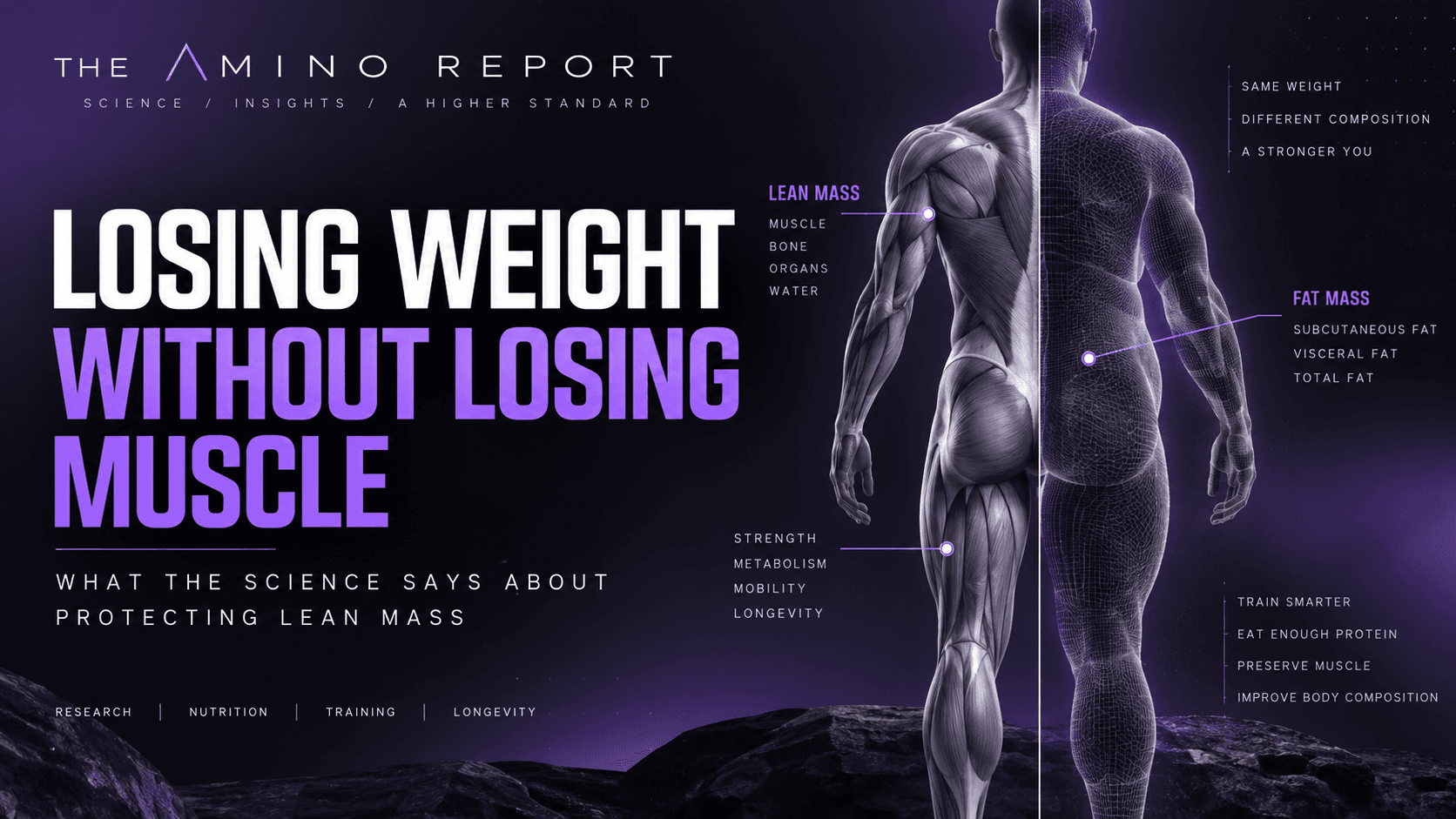
Losing Weight Without Losing Muscle: What the Science Says About Protecting Lean Mass
Weight loss doesn't always mean fat loss. Research shows that preserving lean mass can be an important part of improving body composition. We examine what the evidence says about resistance training, protein intake, rate of weight loss, and newer weight-loss therapies.
Read article →

HEALTHY AGING
7
Why Building Muscle and Losing Fat Gets Harder After 40 — And What the Science Says
Building muscle and losing fat can become more challenging with age—but not for the reasons many people think. We examine what research says about muscle protein synthesis, body composition, hormones, recovery, and why resistance training matters after 40.
Read article →

Emerging Science
10
Emerging Peptide Research: The Compounds, Methods, and Datasets to Watch
Peptide research is moving beyond individual compounds. Advances in computational design, structural prediction, analytical testing, and biological datasets are changing how peptide candidates are discovered and how researchers decide which signals are worth pursuing.
Read article →

Emerging Science
10
Mitochondrial Peptides: What MOTS-c, Humanin, and Emerging Research Actually Show
Mitochondrial-derived peptides such as MOTS-c and humanin have opened a new area of research into metabolic signaling, cellular stress, aging, and mitochondrial communication. Here’s what the evidence actually shows—and where intriguing findings remain preliminary.
Read article →

Peptide Library
10
BPC-157 Research: What Is Established, What Remains Uncertain
BPC-157 has attracted enormous attention for tissue repair, tendon healing, gastrointestinal protection, and recovery. Preclinical research is extensive—but human evidence remains remarkably limited.
Read article →

Emerging Science
9
CJC-1295 Research: What the Evidence Actually Shows
CJC-1295 is a long-acting GHRH analog studied for its effects on growth hormone and IGF-1 signaling. This review examines the published human evidence, the important distinction between CJC-1295 with DAC and without DAC, and the questions that remain unanswered.
Read article →
Peptide Library
9
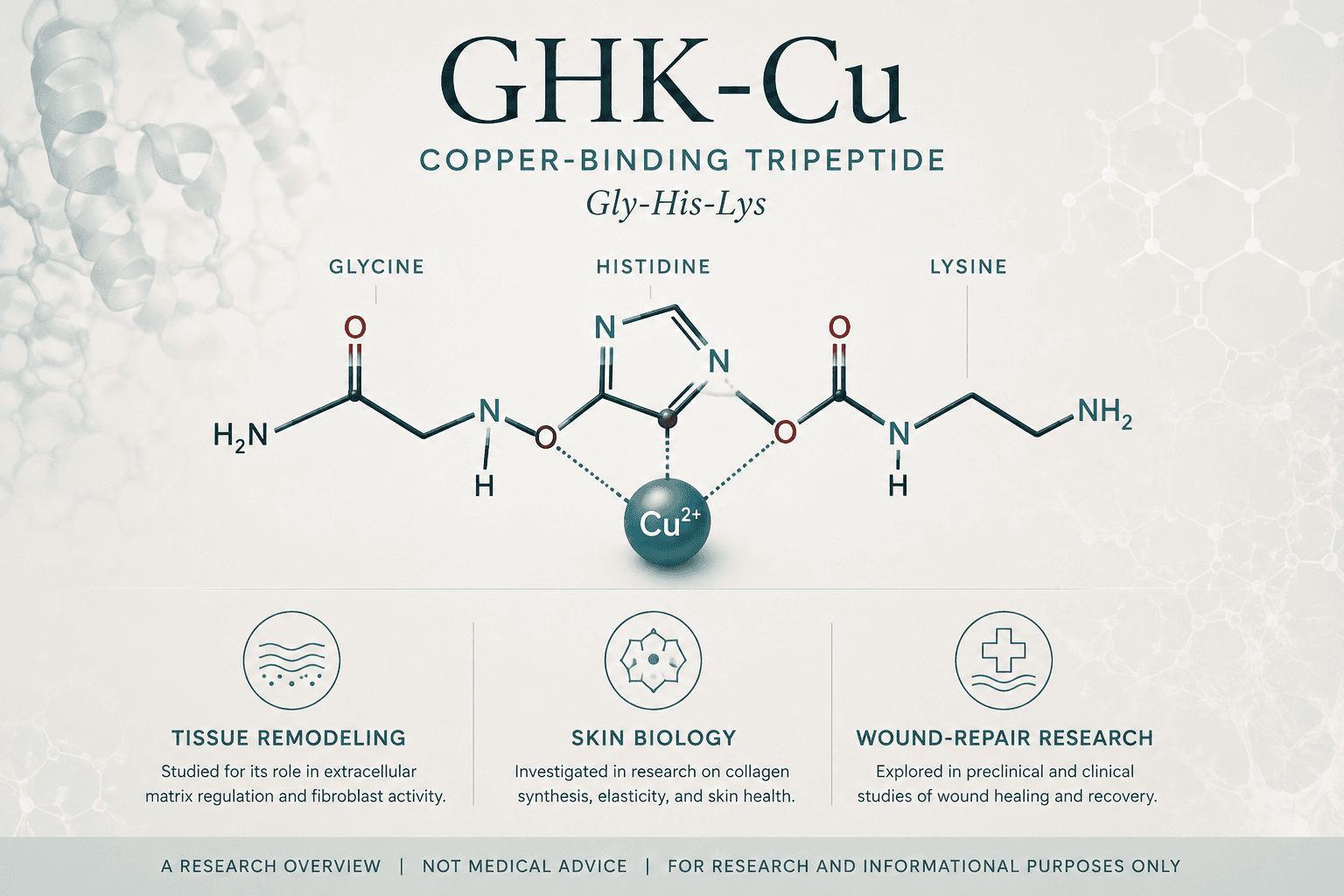
GHK-Cu: Structure, Published Findings, and Open Questions
GHK-Cu is a naturally occurring copper-binding tripeptide studied in tissue remodeling, skin biology, wound repair, and other research contexts. Here’s what the published literature supports—and where important questions remain.
Read article →

Testing & Quality
8
How to Read a Peptide Lab Report: HPLC, Mass Spectrometry, and Assay Explained
A peptide lab report may include chromatograms, mass spectra, purity percentages, and assay results. Here’s what those measurements actually tell you—and why they should not be treated as interchangeable.
Read article →

Peptide Library
8
Retatrutide Research: What the Current Evidence Can and Cannot Tell Us
Retatrutide is an investigational triple receptor agonist targeting GIP, GLP-1, and glucagon receptors. Clinical research has reported substantial effects on body weight and metabolic measures, while important questions remain about long-term outcomes, tolerability, and emerging areas of study.
Read article →

Testing & Quality
8
What Should a Peptide Certificate of Analysis Actually Show?
A Certificate of Analysis can look authoritative at a glance. But what information actually makes a COA useful—and what can a single document really establish about a peptide sample?
Read article →

Testing & Quality
8
What Does 99% Peptide Purity Actually Mean?
A peptide labeled “99% pure” may sound nearly perfect. But that number answers a narrower analytical question than many people realize. Here’s what peptide purity can tell us—and what it cannot.
Read article →